€22 UV Primer Put to the Test
Does UV printing hold with the CO Primer? Dishwasher and scratch test
K-LAB Test 02: €22 UV Primer Put to the Test
Why this test?
I bought a UV primer from the OCBESTJET Printer Consumables Store. 500 ml costs around 22 euros.
OCBESTJET UV Primer on AliExpress
Expensive primers are often recommended on social media. People often do not search on AliExpress, or everything that comes from China is happily labelled as cheap Chinese junk. I see it differently. Not everything that is cheap is automatically bad. YES, I am a user, also a sysadmin, and not an influencer who gets their stuff for free and prints a thousand beautiful things … I am a user who looks at prices and gathers experience while using my machines. I have more "Shit happens" than super-beautiful marketing videos. I like gathering my own experience and I am very hard to "influence".
**YEEEEEEES, I buy cheap Chinese junk, gladly, and I am happy with it ** This includes my Sculpfun S30 Pro 20 Watt, my two Anycubic Kobra 3s, my heat presses, my eufyMake E1 and probably half my workshop. Almost every machine or electronic device today is somehow connected to China. Either built there completely or at least the circuit boards, motors, power supplies, displays, sensors, etc. Things that really manage without Chinese production completely probably hardly exist. Especially in the areas of 3D printing, UV printing, DTF, sublimation, laser technology and electronics, the selection is huge. Of course, there is junk there too. But that also exists in expensive. So: I test the cheapest first. But now to the point!
What was printed?
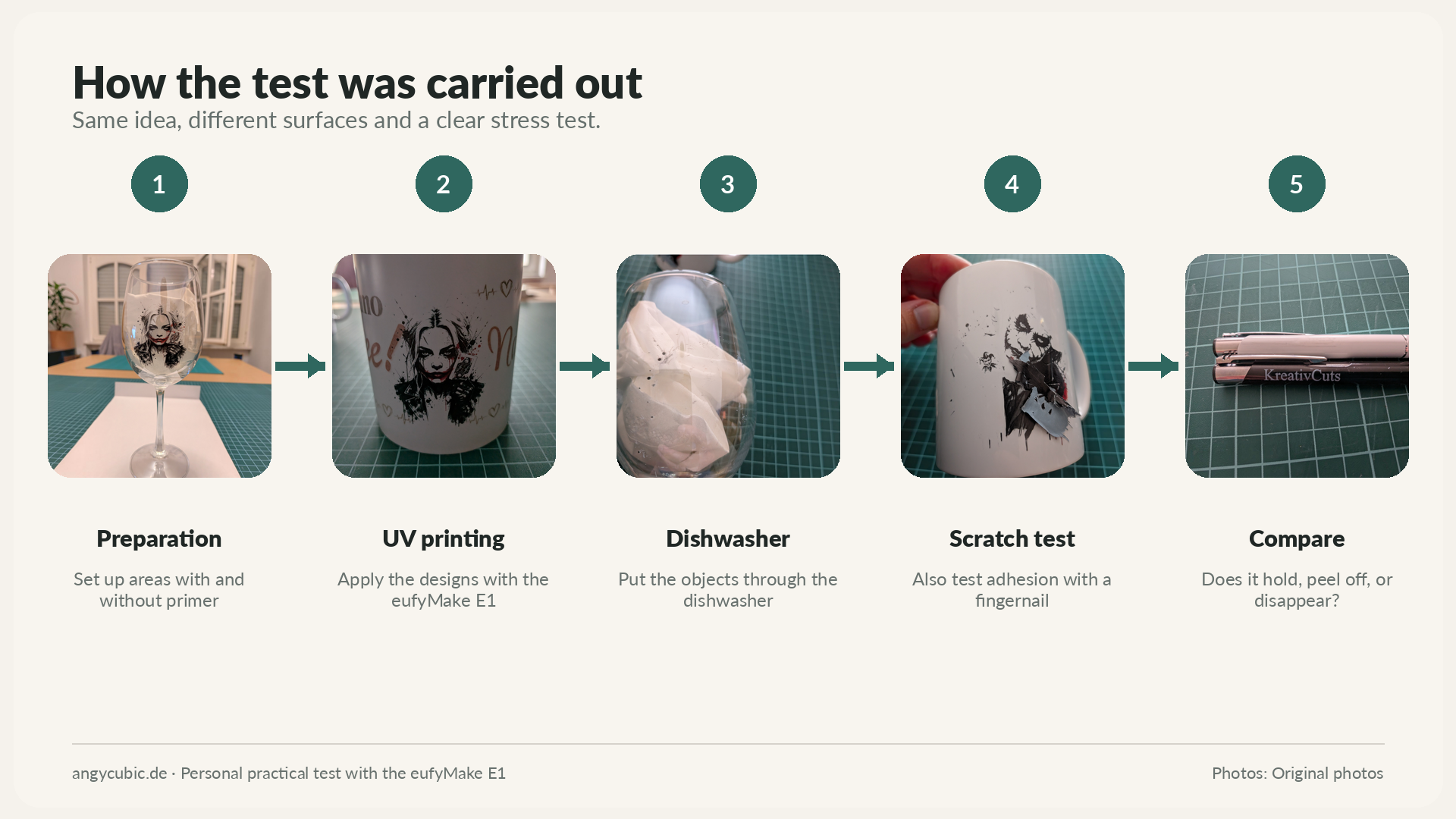
The previous test prints were printed with the following settings:
- White: 3
- CMYK: 1
- White Ink: normal White Ink
Glass, metal, ballpoint pens and two different Orca sublimation mugs were tested. Some prepared with primer. Afterwards dishwasher and scratch test.
ORCA sublimation mug matte (available here)
ORCA sublimation mug high gloss (available here)
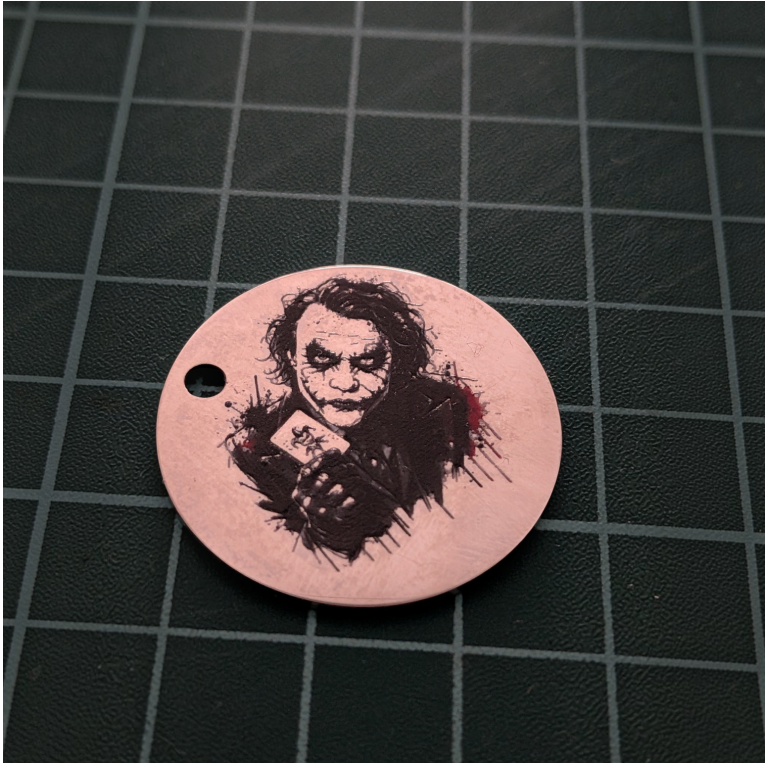
Stainless steel key ring (available here)
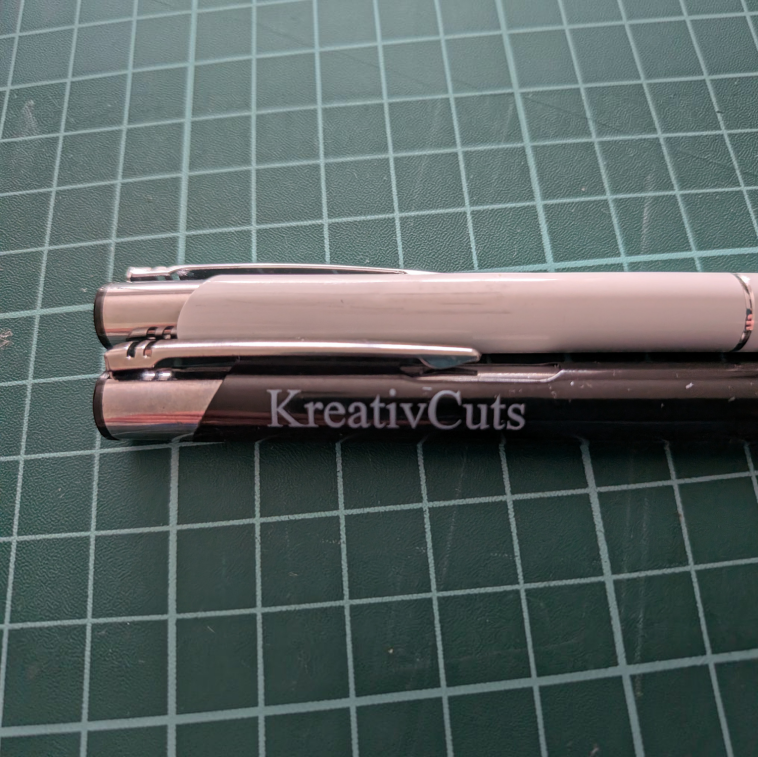
Ballpoint pens (available here)
Wine glass (available here)
What is an Orca coating?
Orca coating is for sublimation blanks. A kind of primer that absorbs the gaseous sublimation ink. This means the colour does not simply sit on top of the mug, but is bonded into the coating. “ORCA Coatings” is a brand name for such a coating. It enables strong colours, high print resolution and good durability. Which I can also confirm, these are the best. The coating is available in matte and glossy versions.
For my UV test, the important thing is: Both are suitable for sublimation, but they do not behave the same with UV printing.
The test objects
| Test object | Preparation | Result |
|---|---|---|
| Wine glass “Lady J” | Without primer | Print almost completely gone after the dishwasher |
| Wine glass “Mister J” | Partly with, partly without primer | Peeled off without primer, remained and scratch-resistant with primer |
| Matte Orca sublimation mug | With primer | Print held and was scratch-resistant |
| Matte Orca sublimation mug | Without primer | Print also held and was scratch-resistant |
| Glossy Orca sublimation mug | Without primer | Print peeled off |
| Metal key ring | Partly with, partly without primer | Could be peeled off without primer, with primer it survived the dishwasher |
| White ballpoint pen | Without primer | Print removable with a fingernail |
| Black ballpoint pen | With primer | Print held and was scratch-resistant |
Glass without primer
“Lady J” was printed on a normal wine glass. No primer, no coating, simply directly onto the glass. Directly after printing: The design was clean, complete and scratch-resistant. After the dishwasher, however, Lady J was gone. Not a little damaged or lightly scratched, but almost completely gone. Only a few small colour crumbs were left.
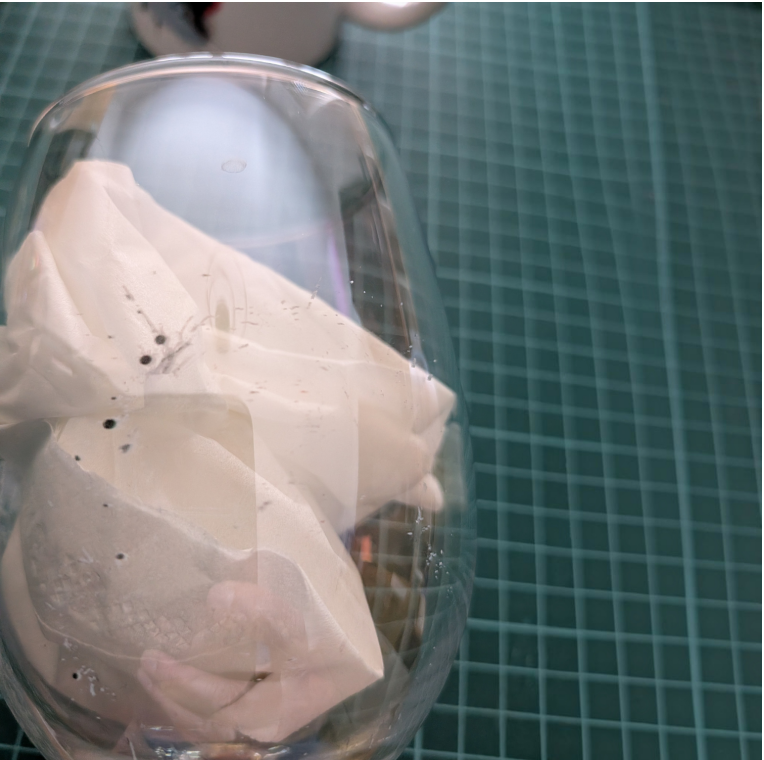
This shows quite clearly: Just because a print looks good directly after printing does not mean that it actually adheres to the surface.
Glass with and without primer
Wine glass with “Mister J”. One half of the print area is treated with the OCBESTJET primer, the other half remained without primer. The design was then printed across both areas. Directly after printing: The design was clean, complete and scratch-resistant. After the dishwasher, the difference is pretty brutally visible. Where there was no primer under the print, it peeled off. Where primer had been applied, it remained. The primed area also held during the scratch test. No loosening, no peeling, no colour flakes.
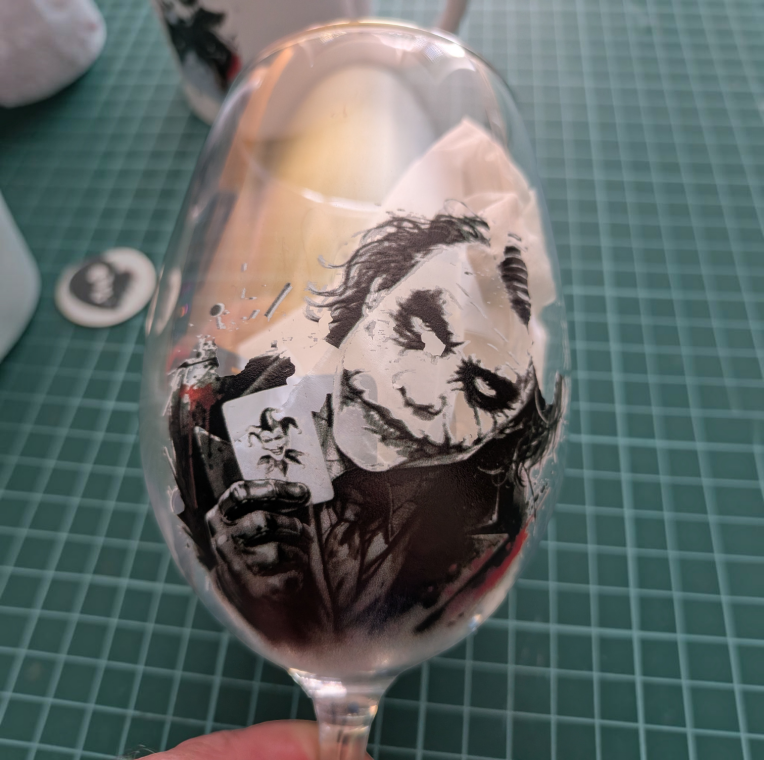
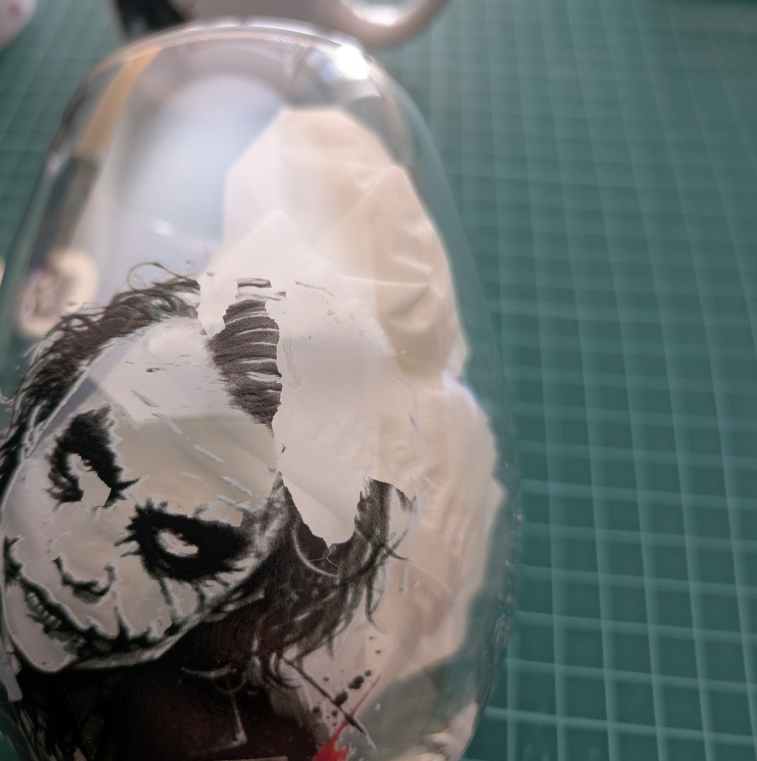
Same glass, same print, same settings, same dishwasher. The only difference was the primer. Without primer gone. With primer there. You can hardly make a better comparison test.
Passed.
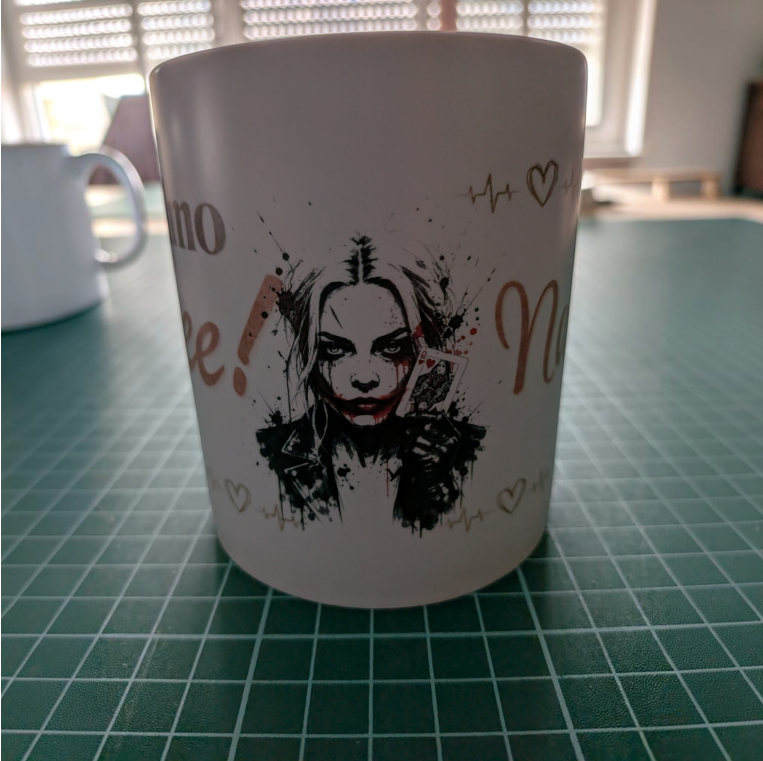
Matte Orca mug with primer
The first matte Orca mug had already been sublimated. Then primer was applied and it was additionally printed on with the eufyMake E1. This was a double test at the same time. I wanted to know whether the UV print holds on the primed surface. The retailer also said that the mug was not dishwasher-safe. So the sublimation got tested at the same time.
After the dishwasher cycle, everything was still there. The sublimation held. The UV print held. Nothing came off during the scratch test either.
 Matte Orca sublimation mug without primer
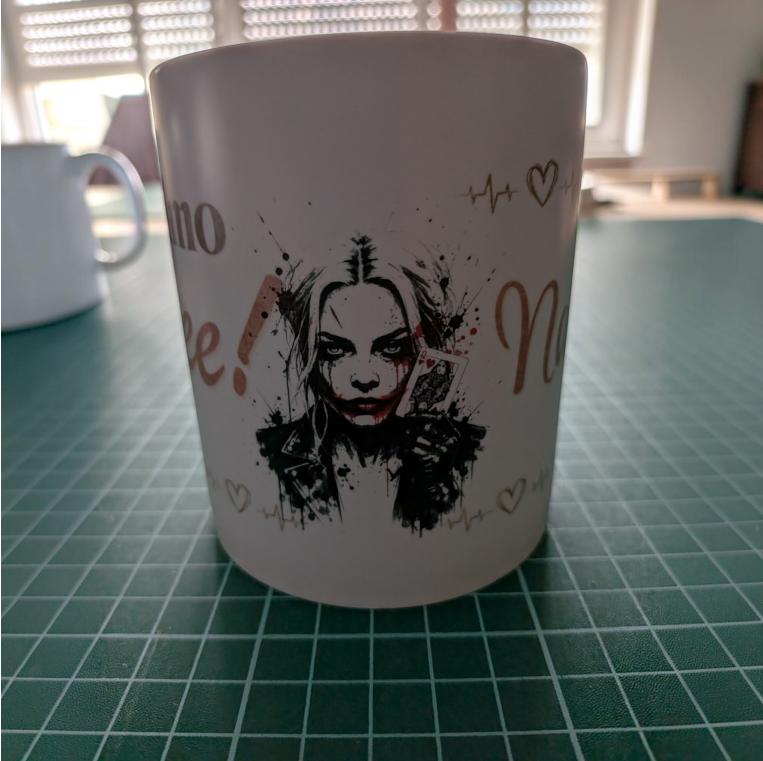
The second matte Orca mug was printed without primer and that one held too. Even after the dishwasher, the print could not be removed with a fingernail. The matte Orca surface apparently already offers enough grip for the UV ink.
That is not a bad result for the primer. It simply shows that you do not have to force primer onto every surface. If it also holds without it, you do not need extra stuff.
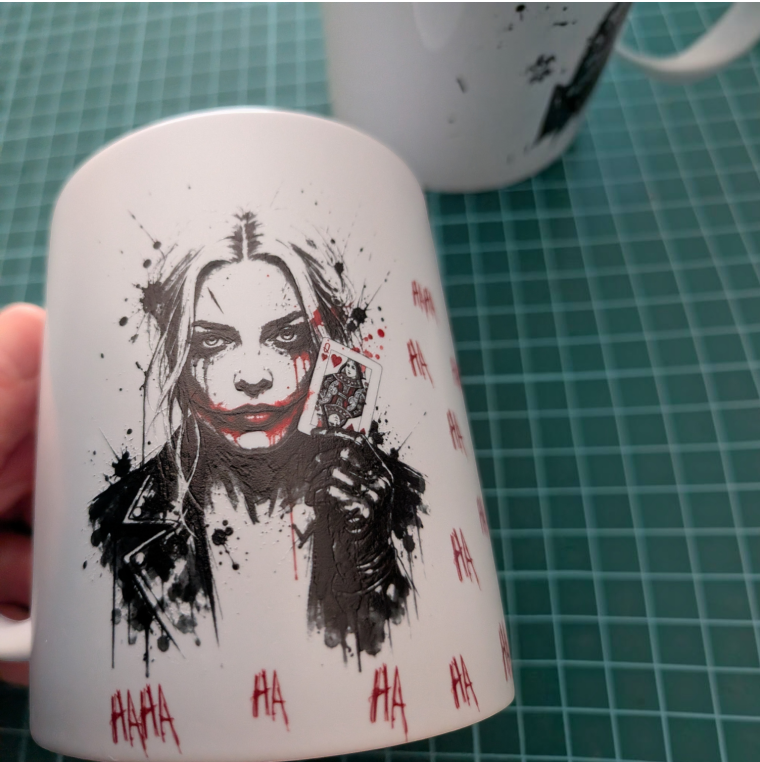
Passed.
Glossy Orca sublimation mug without primer
With the glossy Orca mug, the result looked completely different. Directly after printing: The design was clean, complete and scratch-resistant. The dishwasher, however, also made the design peel off here. Matte holds without primer. Glossy does not. The comparison test with primer on glossy is still missing.
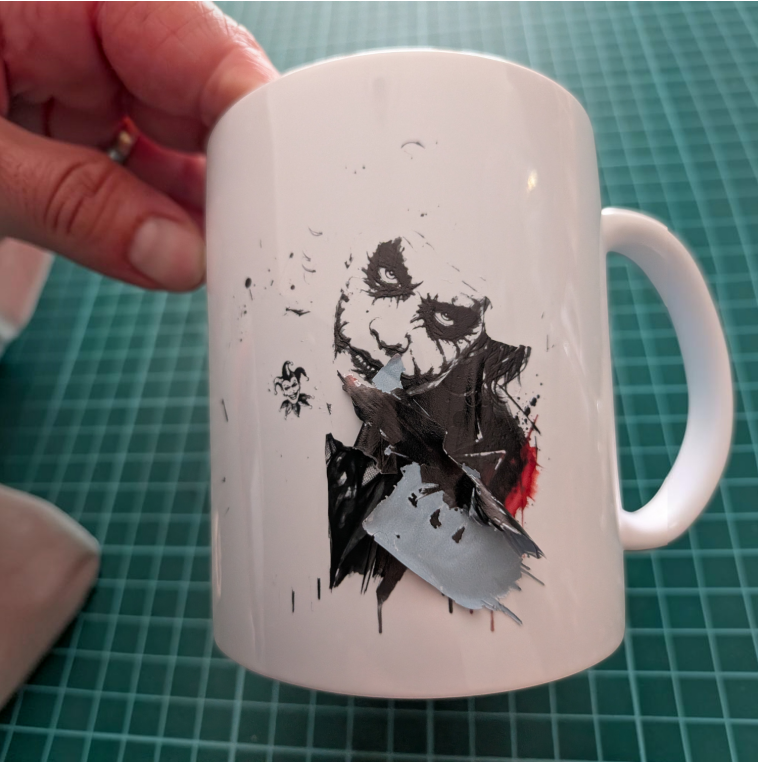
FAILED.
Metal key ring
With the metal key ring, I could practically peel the print straight off the untreated area directly after printing.
With primer: that one even went through the dishwasher and came back out with the print intact. Thanks to primer, it is therefore scratch-resistant and dishwasher-safe.
Passed.
Ballpoint pens
Noooo :D they were not in the dishwasher! The white ballpoint pen is without primer and the black one is with primer. Directly after printing: White: I could scratch it off with my fingernail. Black: Scratch-resistant, even with my little scraper nothing came off:
Passed.
What does the test say about the primer?
I wanted to know whether this cheap primer for around 22 euros per 500 ml does its job. Based on the results so far, the answer is:
Yes. It does.
On glass, the direct comparison showed very clearly that the print only remained on the primed area. On metal, the print with primer also held. On the black ballpoint pen, it was scratch-resistant.
On the matte Orca mug, the print holds with and without primer. On the glossy Orca mug, however, the print without primer failed. So the primer is not a magical mandatory coating for everything. It is an adhesion promoter for surfaces on which the print otherwise does not hold well enough.
What is still missing?
I still have to do two more tests. The first is the glossy Orca mug with primer. The second test is CMYK without White Ink. The previous prints were printed with White (3) and CMYK (1). A pure CMYK print is thinner and can behave differently in the adhesion test. You can also see what difference the white base layer makes on transparent and coloured materials. So the test is not completely finished yet. But the results so far are already pretty clear.
Dishwasher-safe?
One dishwasher cycle is not a lifetime guarantee. I washed at 45° and used DenkMit dishwasher tabs from DM. Stronger tabs or higher temperatures could also have an influence.
My test objects either survived one dishwasher cycle or failed during it. For a real statement about long-term dishwasher resistance, I need several dishwasher cycles. I will post that here later. So NoteBy: Temperature, programme, detergent, material, amount of primer and drying time can also influence the result.
Conclusion
I was honestly positively surprised. The cheap OCBESTJET primer did exactly what it was supposed to do on the problematic surfaces. On glass, the print remained with primer. On metal, it survived the dishwasher. On the black ballpoint pen, it was scratch-resistant. For around 22 euros per 500 ml, the value for money is more than satisfactory for me. So I found a cheap primer that works. No Kickstarter project needed to finance my prints.
Youhou.
The test will still be expanded to include the glossy Orca mug with primer and pure CMYK without White Ink. Until then, my preliminary result is: Cheap Chinese junk? Yes. Does it work anyway? Also yes.
And one last note from the K-Lab: If you do silly tests in your dishwasher, you should not be surprised if you have to clean it afterwards. The peeled UV ink does not disappear through a space-time portal. It lands in the filter, on the walls or spreads around the machine as little pieces of print confetti.
Primer test passed. Please check the dishwasher afterwards as well.
No comments to display
No comments to display